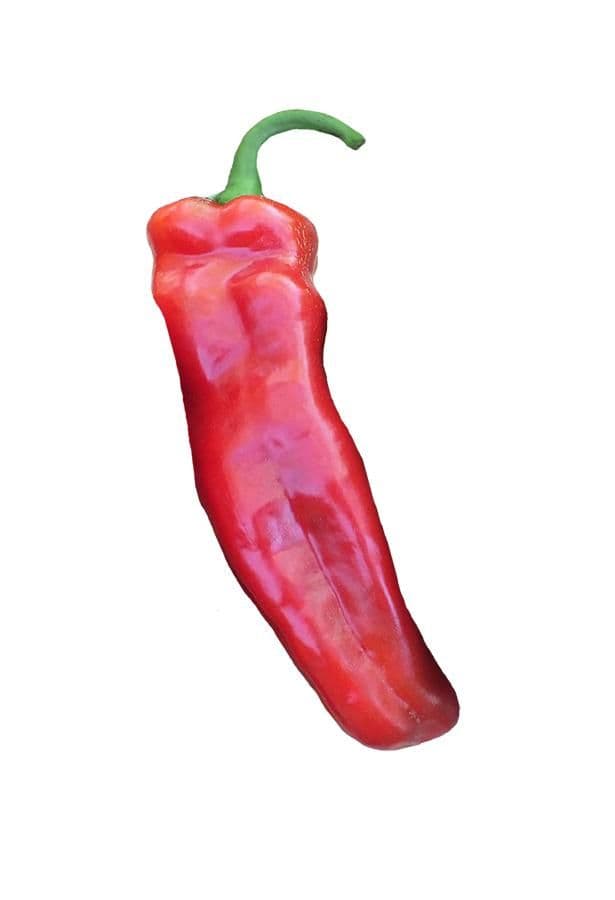
Long Sweet Pepper should be ready to harvest this month. Check for size and colour.
Growing Calendar
This month: Oct
Log to journalReady to harvest now
- •Check size and ripeness
- •Harvest regularly
- •Store or use fresh


Watch Out For
Aphids cluster on soft growing tips: check the undersides of leaves weekly and remove by hand or with a dilute soap spray applied in the evening
Blossom drop in cool or dry conditions: keep greenhouse temperatures above 15°C at night, mist flowers gently to aid pollination, and water consistently
Red spider mite in hot, dry greenhouse conditions: raise humidity by damping down the greenhouse floor daily and remove heavily affected leaves promptly
Blossom end rot shows as a dark, sunken patch on the base of the fruit: caused by a local calcium shortage inside the fruit itself, almost always triggered by irregular watering in a pot or growbag rather than a lack of calcium in the compost. Water consistently rather than adding extra calcium feed



Common Questions
About growing Long Sweet Pepper in the UK
What is the difference between long sweet peppers and bell peppers?
Long sweet peppers (such as Ramiro, Corno di Toro and Marconi types) are elongated and pointed rather than blocky, with thinner walls and sweeter, more concentrated flavour. They are typically more prolific in the UK climate and easier to ripen under glass than bell peppers. Growing requirements are very similar: the main practical difference is that long types are usually ready to harvest two to three weeks earlier.
Can I grow long sweet peppers outside in the UK?
Yes, in a warm, sheltered south-facing position in a good summer, but results are less reliable than under glass. A greenhouse or polytunnel consistently gives better yields, earlier ripening, and larger fruit. If growing outdoors, choose a Ramiro-type variety (one of the most reliable for UK outdoor growing), plant after all risk of frost has passed, and cover with fleece on cool nights in early summer.
When should I harvest long sweet peppers?
Long sweet peppers can be harvested green from midsummer, but become much sweeter and more flavourful when allowed to ripen fully to red, orange or yellow. A useful approach is to pick some fruits green to keep the plant cropping, while leaving others to colour up for eating ripe. Leaving every fruit to ripen simultaneously reduces overall yield.
How do I feed long sweet peppers?
Feed in two phases. From planting until the first flowers appear, use a balanced liquid feed every two weeks to build a strong plant. Once flowers open and fruit begins to set, switch to a high-potassium feed (tomato feed or comfrey liquid) applied weekly until the end of the season. Consistent potassium from fruit set onwards produces the best yields and sweetest flavour.
Why are my pepper flowers dropping off?
Flower drop is usually caused by temperature stress: nights below 12°C or daytime temperatures above 32°C both cause flowers to abort. In a greenhouse, keep temperatures above 15°C at night. Dry air also contributes: mist the foliage gently and damp down the greenhouse floor in hot weather. Inconsistent watering is another cause: keep compost evenly moist rather than alternating between dry and waterlogged.
Written from real growing experience, organic methods only. Our story · Our approach
Members
Track your long sweet pepper from sowing to harvest in My Garden.