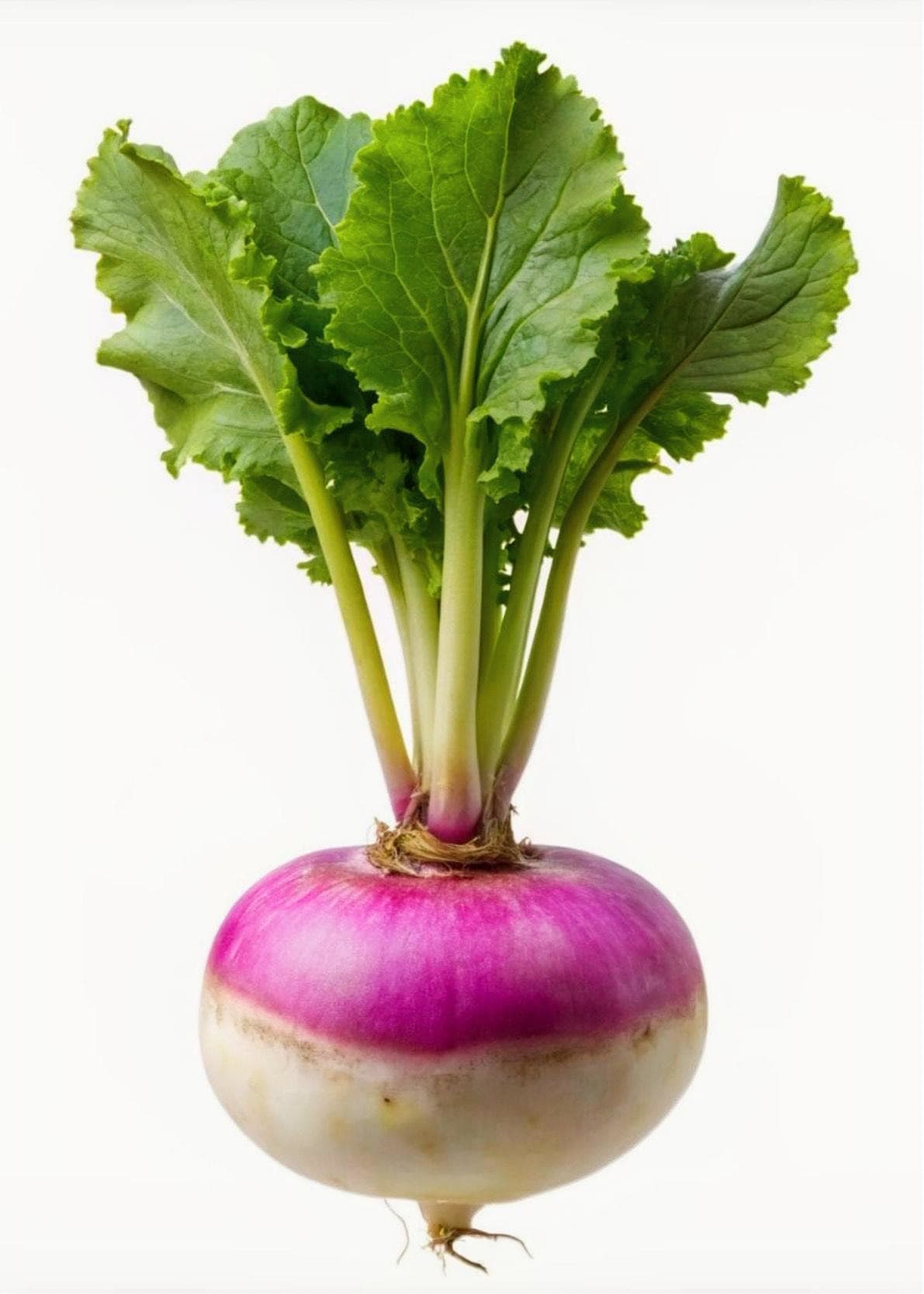
Turnip should be ready to harvest this month. Check for size and colour.
Growing Calendar
This month: Oct
Log to journalReady to harvest now
- •Check size and ripeness
- •Harvest regularly
- •Store or use fresh

Watch Out For
Flea beetle peppers leaves with small holes: cover with fine mesh from sowing and water regularly to help plants grow through the vulnerable seedling stage
Bolts quickly in hot dry weather: sow in spring and again from late July for an autumn crop, avoiding the peak of summer
Overcrowding produces poor roots: thin promptly to 15cm apart as soon as seedlings are large enough to handle



Common Questions
About growing Turnip in the UK
When do I sow turnips in the UK?
Sow turnips from March to September. Sow early varieties from March for young, tender spring turnips. Main sowing runs from May to August for summer and autumn harvest. Late sowings (August–September) give roots that can stay in the ground into winter.
Why are my turnips woody or bitter?
Turnips become woody and bitter when left in the ground too long or grown in very dry conditions. Harvest when roots are 5–8cm in diameter for the best sweet, tender flavour. Baby turnips can be harvested even smaller: golf-ball size is excellent.
Are turnip leaves edible?
Yes, turnip tops (the young leaves) are edible and nutritious, similar in flavour to spring greens or mustard greens. They can be eaten raw in salads when young, or cooked briefly by steaming or stir-frying. Some gardeners grow turnips specifically for the greens.
Do turnips need a lot of space?
Turnips are compact vegetables well-suited to small beds and containers. Thin plants to 15cm apart for standard sizes, or 7–8cm for baby turnip production. They grow quickly and can be fitted between rows of slower crops.
Written from real growing experience, organic methods only. Our story · Our approach
Members
Track your turnip from sowing to harvest in My Garden.